
Showing posts with label On Board. Show all posts
Showing posts with label On Board. Show all posts
Thursday, March 8, 2012
Religious Services
Most ships provide nondenominational religious services on Sundays and religious holidays, and a number offer daily Catholic masses and Friday-evening Jewish services. The kind of service held depends upon the clergy the cruise line invites on board. Religious services are usually held in the library, the theater, or one of the private lounges, although a few ships have actual chapels.
Wednesday, March 7, 2012
Communications
Most ships provide nondenominational religious services on Sundays and religious holidays, and a number offer daily Catholic masses and Friday-evening Jewish services. The kind of service held depends upon the clergy the cruise line invites on board. Religious services are usually held in the library, the theater, or one of the private lounges, although a few ships have actual chapels.
Tuesday, March 6, 2012
Healt Care
Quality medical care at sea is another important safety issue. All big ships are equipped with medical infirmaries to handle minor emergencies. However, these should not be confused with hospitals. Unlike with fire safety, there are no international standards governing medical facilities or personnel aboard cruise ships although the American Medical Association has recommended that such standards be adopted.
If you have a preexisting medical condition, discuss your upcoming cruise with your doctor. Pack extra supplies of any medicines you might need. Once aboard, see the ship's doctor and alert him or her to your condition, and discuss treatments or emergency procedures before the situation arises.
Passengers with potentially life-threatening conditions should seriously consider signing up with a medical evacuation service, and all passengers should review their health insurance to make sure they are covered while on a cruise.
If you become seriously ill or injured and happen to be near a modern major city, you may be taken to a medical facility shoreside. But if you're farther afield, you may have to be airlifted off the ship by helicopter and flown either to the nearest American territory or to an airport where you can be taken by charter jet to the United States. Mandatory safety standards of the International Council of Cruise Lines (ICCL) require that all members have suitable, unobstructed helicopter pick-up areas for evacuating patients to shore hospitals.
Many standard health insurance policies, as well as Medicare, do not cover these or other medical expenses incurred outside the United States. You can, however, buy supplemental health insurance to cover you while traveling.
If you have a preexisting medical condition, discuss your upcoming cruise with your doctor. Pack extra supplies of any medicines you might need. Once aboard, see the ship's doctor and alert him or her to your condition, and discuss treatments or emergency procedures before the situation arises.
Passengers with potentially life-threatening conditions should seriously consider signing up with a medical evacuation service, and all passengers should review their health insurance to make sure they are covered while on a cruise.
If you become seriously ill or injured and happen to be near a modern major city, you may be taken to a medical facility shoreside. But if you're farther afield, you may have to be airlifted off the ship by helicopter and flown either to the nearest American territory or to an airport where you can be taken by charter jet to the United States. Mandatory safety standards of the International Council of Cruise Lines (ICCL) require that all members have suitable, unobstructed helicopter pick-up areas for evacuating patients to shore hospitals.
Many standard health insurance policies, as well as Medicare, do not cover these or other medical expenses incurred outside the United States. You can, however, buy supplemental health insurance to cover you while traveling.
Sunday, February 26, 2012
Common Ailments
The most common minor medical problems confronting cruise passengers are seasickness and gastrointestinal distress. Modern cruise ships, unlike their earlier transatlantic predecessors, are relatively motion-free vessels with computer-controlled stabilizers, and they usually sail in comparatively calm waters. If, however, you do feel queasy, you can always get seasickness pills aboard ship. (Many ships give them out for free at the front desk.)
Outbreaks of food poisoning happen from time to time aboard cruise ships. These episodes are random; they happen on ships old and new, big and small, budget and luxury. The Centers for Disease Control monitor cruise-ship hygiene and sanitation procedures, conducting voluntary inspections twice a year of all ships that sail regularly from U.S. ports (this program does not include ships that never visit the United States). For a free listing of the latest ship scores, contact the CDC's Vessel Sanitation Program (VSP; 4770 Buford Highway NE, Mail Stop F-16, Atlanta, GA 30341, tel. 770/488-7333, NCEH Health Line/fax-back service 888/232-6789). On the Web site, you can search through all the scores and read the inspection reports.
A high score on the CDC report doesn't mean you won't get sick. Outbreaks have taken place on ships that consistently score very highly; conversely, some ships score very poorly yet passengers never get sick. So use these scores as a guideline and factor them in with other considerations when choosing your ship.
Outbreaks of food poisoning happen from time to time aboard cruise ships. These episodes are random; they happen on ships old and new, big and small, budget and luxury. The Centers for Disease Control monitor cruise-ship hygiene and sanitation procedures, conducting voluntary inspections twice a year of all ships that sail regularly from U.S. ports (this program does not include ships that never visit the United States). For a free listing of the latest ship scores, contact the CDC's Vessel Sanitation Program (VSP; 4770 Buford Highway NE, Mail Stop F-16, Atlanta, GA 30341, tel. 770/488-7333, NCEH Health Line/fax-back service 888/232-6789). On the Web site, you can search through all the scores and read the inspection reports.
A high score on the CDC report doesn't mean you won't get sick. Outbreaks have taken place on ships that consistently score very highly; conversely, some ships score very poorly yet passengers never get sick. So use these scores as a guideline and factor them in with other considerations when choosing your ship.
Wednesday, January 21, 2009
Everything for Cruises...
Some say the most important aspect of a cruise is your destination. Some say it's the itinerary. Others say it's the cruise line. They're all wrong.
The most important choice you'll make when choosing a cruise is the ship.
Here's why: Whatever ship you choose will be your home for seven days or more. The ship you choose will determine what kinds of sleeping quarters you'll have, what kind of food you'll eat, what kind of entertainment you'll see, and even what ports you'll visit. If you don't like your ship, you won't like your cruise.
With dozens of lines, hundreds of ships, and thousands of itineraries available, it's no wonder that many people become anxious when planning a cruise. But choosing and booking a cruise can be fun -- if you have a plan. The following pages contain advice about everything from where to gather information to how to evaluate cruise-ship features... Some are; cruise lines, carnival cruises, princess cruises...
The most important choice you'll make when choosing a cruise is the ship.
Here's why: Whatever ship you choose will be your home for seven days or more. The ship you choose will determine what kinds of sleeping quarters you'll have, what kind of food you'll eat, what kind of entertainment you'll see, and even what ports you'll visit. If you don't like your ship, you won't like your cruise.
With dozens of lines, hundreds of ships, and thousands of itineraries available, it's no wonder that many people become anxious when planning a cruise. But choosing and booking a cruise can be fun -- if you have a plan. The following pages contain advice about everything from where to gather information to how to evaluate cruise-ship features... Some are; cruise lines, carnival cruises, princess cruises...
First Safety
The greatest danger facing cruise-ship passengers is fire. All cruise lines must meet certain international standards for fire safety. The rules that went into effect in October 1997 require that ships have sprinkler systems, smoke detectors, and other safety features. In November 2000, the International Council of Cruise Lines (ICCL) announced that audible smoke alarms would be installed in all cabins, staterooms, and cabin corridors on their ships, as recommended by the National Transportation Safety Board. Each member cruise line agreed to install local alarms as soon as feasibly possible, so check with your line to see if they have been installed.
In March 2001, the ICCL adopted new mandatory safety standards regarding life jackets,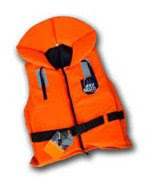 requiring members to have an infant flotation device for every infant on board and to increase the number of adult life jackets by 30-50% by July 1, 2001. These rules are designed to protect against loss of life. They do not guarantee that a fire will not happen; in fact, fire is a relatively common occurrence on cruise ships. The point here is not to create alarm, but to emphasize the importance of taking fire safety seriously.
Fire safety begins with you, the passenger. Once settled into your cabin, find the location of your life vests and review the emergency instructions inside the cabin door or near the life vests. Ensure your vests are in good condition and learn to secure the vest properly. Make certain the ship's purser knows if you or your companion has some physical infirmity that may hamper a speedy exit from your cabin.
In case of an emergency, the purser can quickly dispatch a crew member to assist you. If you are traveling with children, be sure child-size life jackets are placed in your cabin.
Within 24 hours of boarding your ship, you will be asked to attend a mandatory lifeboat drill. Do so and listen carefully. If you have any questions, ask them. If you are unsure of how to use your vest, now is the time to ask. Only in the most extreme circumstances will you need to abandon ship -- but it has happened. The few minutes you spend learning the right procedure may serve you well in a mishap.
In March 2001, the ICCL adopted new mandatory safety standards regarding life jackets,
 requiring members to have an infant flotation device for every infant on board and to increase the number of adult life jackets by 30-50% by July 1, 2001. These rules are designed to protect against loss of life. They do not guarantee that a fire will not happen; in fact, fire is a relatively common occurrence on cruise ships. The point here is not to create alarm, but to emphasize the importance of taking fire safety seriously.
Fire safety begins with you, the passenger. Once settled into your cabin, find the location of your life vests and review the emergency instructions inside the cabin door or near the life vests. Ensure your vests are in good condition and learn to secure the vest properly. Make certain the ship's purser knows if you or your companion has some physical infirmity that may hamper a speedy exit from your cabin.
In case of an emergency, the purser can quickly dispatch a crew member to assist you. If you are traveling with children, be sure child-size life jackets are placed in your cabin.
Within 24 hours of boarding your ship, you will be asked to attend a mandatory lifeboat drill. Do so and listen carefully. If you have any questions, ask them. If you are unsure of how to use your vest, now is the time to ask. Only in the most extreme circumstances will you need to abandon ship -- but it has happened. The few minutes you spend learning the right procedure may serve you well in a mishap.
Photography
The staff photographer, a near-universal fixture on cruise ships, records every memorable, photogenic moment. The thousands of photos snapped over the course of a cruise are displayed publicly in special cases every morning and are offered for sale. If you want a special photo or a portrait, the photographer is usually happy to oblige.
Many passengers choose to have a formal portrait taken before the captain's farewell dinner -- the dressiest evening of the cruise. The ship's photographer usually anticipates this demand by setting up a portable studio near the dining-room entrance.
If you're more of a do-it-yourselfer and would rather spring for the convenience of seeing your own shots right away, many cruise ships have color-film processing and printing equipment to develop film overnight.
Many passengers choose to have a formal portrait taken before the captain's farewell dinner -- the dressiest evening of the cruise. The ship's photographer usually anticipates this demand by setting up a portable studio near the dining-room entrance.
If you're more of a do-it-yourselfer and would rather spring for the convenience of seeing your own shots right away, many cruise ships have color-film processing and printing equipment to develop film overnight.
Laundry

All but the smallest ships and shortest cruises offer laundry services -- full-service, self-service, or both. Use of machines is generally free, although some ships charge for detergent, use of the machines, or both. Valet laundry service includes cabin pickup and delivery and usually takes 24 hours. Most ships also offer dry-cleaning services.
Room Services
 A small number of ships have no room service at all, except when the ship's doctor orders it for an ailing passenger. Many offer only breakfast (Continental on some, full on others), while others provide no more than a limited menu at certain hours of the day. Most, however, have certain selections that you can order at any time. Some luxury ships have unlimited round-the-clock room service. There usually is no charge for room service, other than for beer, wine, or spirits.
An increasing number of ships equip their more expensive cabins with small refrigerators or minibars stocked with snacks, soft drinks, and liquors, which may or may not be free.
Promenade Deck
Many vessels designate certain decks for fitness walks and may post the number of laps per mile. Fitness instructors may lead daily walks around the Promenade Deck. A number of ships discourage jogging and running on the decks or ask that no one take fitness walks before 8 AM or  after 10 PM, so as not to disturb passengers in cabins. With the advent of the megaship, walking and jogging have in many cases moved up top to tracks on the Sun or Sports deck.
For additional information about sports and fitness activities, refer to Tips for Sports Enthusiasts in the "Choosing Your Cruise" section.
 after 10 PM, so as not to disturb passengers in cabins. With the advent of the megaship, walking and jogging have in many cases moved up top to tracks on the Sun or Sports deck.
For additional information about sports and fitness activities, refer to Tips for Sports Enthusiasts in the "Choosing Your Cruise" section.
Exercise
Most newer ships and some older ones have well-equipped fitness centers, many with massage, sauna, and whirlpools. An upper-deck fitness center often has a view of the sea; an inside, lower-deck health club is often dark and small unless it is equipped with an indoor pool or beauty salon.
 Many ships have full-service exercise rooms with bodybuilding equipment, stationary bicycles, rowing machines, treadmills, aerobics classes, and personal fitness instruction. Some ships even have structured, cruise-length physical-fitness programs, which may include lectures on weight loss or nutrition. These often are tied in with a spa menu in the dining room.
Spas have become increasingly popular on cruises. They may have giant thalassotherapy pools (a combination Jacuzzi and massage), indoor heated swimming pools, and treatment rooms. The list of treatments may include ionotherapy, aromatherapy, hydrotherapy, and reflexology. The spas may also sell beauty products not available at home.
 Many ships have full-service exercise rooms with bodybuilding equipment, stationary bicycles, rowing machines, treadmills, aerobics classes, and personal fitness instruction. Some ships even have structured, cruise-length physical-fitness programs, which may include lectures on weight loss or nutrition. These often are tied in with a spa menu in the dining room.
Spas have become increasingly popular on cruises. They may have giant thalassotherapy pools (a combination Jacuzzi and massage), indoor heated swimming pools, and treatment rooms. The list of treatments may include ionotherapy, aromatherapy, hydrotherapy, and reflexology. The spas may also sell beauty products not available at home.
Sun Deck
The top deck is usually called the Sun Deck or Sports Deck. On some ships this is where you'll find the pool or whirlpool; on others it is dedicated to volleyball, table tennis, shuffleboard, and other sports. A number of ships have paddle-tennis courts, and a few have golf driving ranges. (Skeet shooting is fast becoming a thing of the past on cruise ships; when available it's usually offered at the stern of a lower deck.) Often, at twilight or after the sun goes down, the Sun Deck is used for dancing, barbecues, limbo contests, or other social activities.


Tuesday, January 20, 2009
Pools
 All but the smallest ships have at least one pool, some of them elaborate affairs with water slides or retractable roofs; hot tubs and whirlpools are quite common.
Pools may be filled with fresh or salt water; some ships have one of each. While in port or during rough weather, the pools are usually emptied or covered with canvas. Many are too narrow or too short to allow swimmers more than a few strokes in any direction; none have diving boards, and not all are heated. Often there are no lifeguards. Wading pools are sometimes provided for small children.
Bingo
The daily high-stakes bingo games are even more popular than the casinos. You can play for as little as a dollar a card. Most ships have a bingo game with a jackpot that snowballs throughout the cruise into hundreds or even thousands of dollars.
Another popular cruise pastime is the so-called "horse race": Fictional horses are auctioned off to "owners." Individual passengers can buy a horse or form "syndicates." Bids usually begin at around $25 and can top $1,000 per horse. Races are then "run" according to dice throws or computer-generated random numbers. Audience members bet on their favorites.
Another popular cruise pastime is the so-called "horse race": Fictional horses are auctioned off to "owners." Individual passengers can buy a horse or form "syndicates." Bids usually begin at around $25 and can top $1,000 per horse. Races are then "run" according to dice throws or computer-generated random numbers. Audience members bet on their favorites.
Game Rooms
Most ships have a game or card room with card tables and board games. These rooms are for serious players and are often the site of friendly round-robin competitions and tournaments. Most ships furnish everything for free (cards, chips, games, and so forth), but a few charge $1 or more for each deck of cards. Be aware that professional cardsharps and hustlers have been fleecing ship passengers almost as long as there have been ships.
There are small video arcades on most medium and large ships. Family-oriented ships often have a computer learning center as well.
There are small video arcades on most medium and large ships. Family-oriented ships often have a computer learning center as well.
Casinos
Once a ship is 12 miles off American shores, it is in international waters and gambling is permitted. (Some "cruises to nowhere," in fact, are little more than sailing casinos.) All ocean liners, as well as many cruise yachts and motor-sailing ships, have casinos. Larger vessels usually provide such table games as poker, baccarat, blackjack, roulette, and craps. On most ships the maximum bet is $200; some ships allow $500.
 Payouts on the slot machines (some of which take as little as a nickel) are generally much lower, too. Credit is never extended, but many casinos have handy credit-card machines that dispense cash for a hefty fee.
Casinos are usually open from early morning to late night, although you may find only unattended slot machines before evening. In adherence to local laws, casinos are always closed while in port.
 Payouts on the slot machines (some of which take as little as a nickel) are generally much lower, too. Credit is never extended, but many casinos have handy credit-card machines that dispense cash for a hefty fee.
Casinos are usually open from early morning to late night, although you may find only unattended slot machines before evening. In adherence to local laws, casinos are always closed while in port.
Lectures
Some ships may offer a lecture series featuring expert speakers. You can attend the lectures in person (usually they're held in the main lounge) or watch them on your in-cabin TV. These lectures can be the highlight of your cruise, providing insight into your next port of call. They can also be (and often are) nothing more than shopping talks.
If enrichment is high on your list of cruise priorities, check the credentials of the speakers. Cruise lines with serious lecture programs usually list the participants in their brochures and outline their expertise. On a few big ships, there may be as many as five expert speakers on any given cruise, representing anthropology, archaeology, astronomy, geology, oceanography, and other fields. There may even be a theme tying all the disciplines together. The smallest ships may have only one speaker -- a historian or naturalist -- who conducts shipboard talks and leads excursions ashore.
If enrichment is high on your list of cruise priorities, check the credentials of the speakers. Cruise lines with serious lecture programs usually list the participants in their brochures and outline their expertise. On a few big ships, there may be as many as five expert speakers on any given cruise, representing anthropology, archaeology, astronomy, geology, oceanography, and other fields. There may even be a theme tying all the disciplines together. The smallest ships may have only one speaker -- a historian or naturalist -- who conducts shipboard talks and leads excursions ashore.
Movie Theaters
 All but the smallest vessels have a room for screening movies. On older ships and some newer ones, this is often a genuine cinema-style movie theater. On other ships, it may be just a multipurpose room. The films are frequently one or two months past their first release but not yet available on videotape or cable TV. Films rated "R" are edited to minimize sex and violence. On a weeklong voyage, a dozen different films may be screened, each one repeated at various times during the day. Theaters are also used for lectures, religious services, and private meetings.
Many shipboard libraries also stock videotapes that can be played on the in-cabin VCRs. Almost all ships these days show recently released movies on their closed-circuit television systems. Some also show satellite news programming like CNN International, which has become standard fare on most in-cabin TVs.
Nightlife
 On ocean liners, the main entertainment lounge or showroom schedules nightly musical revues, magic acts, comedy performances, and variety shows. During the rest of the day the room is used for group activities, such as shore-excursion talks or bingo games.
Generally, the larger the ship, the bigger and more impressive the productions. Newer ships have elaborate showrooms that often span two decks. Some are designed like an amphitheater while others have two levels -- a main floor and a balcony. Seating is sometimes in clusters of armchairs set around cocktail tables. Other ships have more traditional theater-style seating.
Many larger ships have a second showroom. Entertainment and ballroom dancing may go on here late into the night. Elsewhere you may find a disco, nightclub, or cabaret, usually built around a bar and dance floor. Music is provided by a piano player, a disc jockey, or by small performing ensembles such as country-and-western duos or jazz combos.
On smaller ships the entertainment options are more limited, sometimes consisting of no more than a piano around which passengers gather. There may be a main lounge where scaled-down revues are staged.
Entertainment
Many cruise lines publish a daily schedule of events, listing all of your entertainment options. It becomes the equivalent of your daily newspaper, delivered to your cabin every evening.
 You will probably want to get a sense of what a typical day on board will be like before you sail. To see a sample daily events schedule, it's possible to call the cruise line and request a recent copy of the onboard newsletter. Some cruise lines also send out booklets detailing the daily schedules before sailing. Most cruise line Web sites list the entertainment options available on board. Both Holland America and Princess Cruises publish their daily itineraries on their Web sites.
 You will probably want to get a sense of what a typical day on board will be like before you sail. To see a sample daily events schedule, it's possible to call the cruise line and request a recent copy of the onboard newsletter. Some cruise lines also send out booklets detailing the daily schedules before sailing. Most cruise line Web sites list the entertainment options available on board. Both Holland America and Princess Cruises publish their daily itineraries on their Web sites.
Subscribe to:
Posts (Atom)

