
Quality medical care at sea is another important safety issue. All big ships are equipped with medical infirmaries to handle minor emergencies. However, these should not be confused with hospitals. Unlike with fire safety, there are no international standards governing medical facilities or personnel aboard cruise ships although the American Medical Association has recommended that such standards be adopted.
If you have a preexisting medical condition, discuss your upcoming cruise with your doctor. Pack extra supplies of any medicines you might need. Once aboard, see the ship's doctor and alert him or her to your condition, and discuss treatments or emergency procedures before the situation arises.
Passengers with potentially life-threatening conditions should seriously consider signing up with a medical evacuation service, and all passengers should review their health insurance to make sure they are covered while on a cruise.
If you become seriously ill or injured and happen to be near a modern major city, you may be taken to a medical facility shoreside. But if you're farther afield, you may have to be airlifted off the ship by helicopter and flown either to the nearest American territory or to an airport where you can be taken by charter jet to the United States. Mandatory safety standards of the International Council of Cruise Lines (ICCL) require that all members have suitable, unobstructed helicopter pick-up areas for evacuating patients to shore hospitals.
Many standard health insurance policies, as well as Medicare, do not cover these or other medical expenses incurred outside the United States. You can, however, buy supplemental health insurance to cover you while traveling.
Showing posts with label Safety At Sea. Show all posts
Showing posts with label Safety At Sea. Show all posts
Tuesday, March 6, 2012
Sunday, February 26, 2012
Common Ailments
The most common minor medical problems confronting cruise passengers are seasickness and gastrointestinal distress. Modern cruise ships, unlike their earlier transatlantic predecessors, are relatively motion-free vessels with computer-controlled stabilizers, and they usually sail in comparatively calm waters. If, however, you do feel queasy, you can always get seasickness pills aboard ship. (Many ships give them out for free at the front desk.)
Outbreaks of food poisoning happen from time to time aboard cruise ships. These episodes are random; they happen on ships old and new, big and small, budget and luxury. The Centers for Disease Control monitor cruise-ship hygiene and sanitation procedures, conducting voluntary inspections twice a year of all ships that sail regularly from U.S. ports (this program does not include ships that never visit the United States). For a free listing of the latest ship scores, contact the CDC's Vessel Sanitation Program (VSP; 4770 Buford Highway NE, Mail Stop F-16, Atlanta, GA 30341, tel. 770/488-7333, NCEH Health Line/fax-back service 888/232-6789). On the Web site, you can search through all the scores and read the inspection reports.
A high score on the CDC report doesn't mean you won't get sick. Outbreaks have taken place on ships that consistently score very highly; conversely, some ships score very poorly yet passengers never get sick. So use these scores as a guideline and factor them in with other considerations when choosing your ship.
Outbreaks of food poisoning happen from time to time aboard cruise ships. These episodes are random; they happen on ships old and new, big and small, budget and luxury. The Centers for Disease Control monitor cruise-ship hygiene and sanitation procedures, conducting voluntary inspections twice a year of all ships that sail regularly from U.S. ports (this program does not include ships that never visit the United States). For a free listing of the latest ship scores, contact the CDC's Vessel Sanitation Program (VSP; 4770 Buford Highway NE, Mail Stop F-16, Atlanta, GA 30341, tel. 770/488-7333, NCEH Health Line/fax-back service 888/232-6789). On the Web site, you can search through all the scores and read the inspection reports.
A high score on the CDC report doesn't mean you won't get sick. Outbreaks have taken place on ships that consistently score very highly; conversely, some ships score very poorly yet passengers never get sick. So use these scores as a guideline and factor them in with other considerations when choosing your ship.
Wednesday, January 21, 2009
First Safety
The greatest danger facing cruise-ship passengers is fire. All cruise lines must meet certain international standards for fire safety. The rules that went into effect in October 1997 require that ships have sprinkler systems, smoke detectors, and other safety features. In November 2000, the International Council of Cruise Lines (ICCL) announced that audible smoke alarms would be installed in all cabins, staterooms, and cabin corridors on their ships, as recommended by the National Transportation Safety Board. Each member cruise line agreed to install local alarms as soon as feasibly possible, so check with your line to see if they have been installed.
In March 2001, the ICCL adopted new mandatory safety standards regarding life jackets,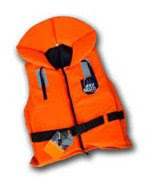 requiring members to have an infant flotation device for every infant on board and to increase the number of adult life jackets by 30-50% by July 1, 2001. These rules are designed to protect against loss of life. They do not guarantee that a fire will not happen; in fact, fire is a relatively common occurrence on cruise ships. The point here is not to create alarm, but to emphasize the importance of taking fire safety seriously.
Fire safety begins with you, the passenger. Once settled into your cabin, find the location of your life vests and review the emergency instructions inside the cabin door or near the life vests. Ensure your vests are in good condition and learn to secure the vest properly. Make certain the ship's purser knows if you or your companion has some physical infirmity that may hamper a speedy exit from your cabin.
In case of an emergency, the purser can quickly dispatch a crew member to assist you. If you are traveling with children, be sure child-size life jackets are placed in your cabin.
Within 24 hours of boarding your ship, you will be asked to attend a mandatory lifeboat drill. Do so and listen carefully. If you have any questions, ask them. If you are unsure of how to use your vest, now is the time to ask. Only in the most extreme circumstances will you need to abandon ship -- but it has happened. The few minutes you spend learning the right procedure may serve you well in a mishap.
In March 2001, the ICCL adopted new mandatory safety standards regarding life jackets,
 requiring members to have an infant flotation device for every infant on board and to increase the number of adult life jackets by 30-50% by July 1, 2001. These rules are designed to protect against loss of life. They do not guarantee that a fire will not happen; in fact, fire is a relatively common occurrence on cruise ships. The point here is not to create alarm, but to emphasize the importance of taking fire safety seriously.
Fire safety begins with you, the passenger. Once settled into your cabin, find the location of your life vests and review the emergency instructions inside the cabin door or near the life vests. Ensure your vests are in good condition and learn to secure the vest properly. Make certain the ship's purser knows if you or your companion has some physical infirmity that may hamper a speedy exit from your cabin.
In case of an emergency, the purser can quickly dispatch a crew member to assist you. If you are traveling with children, be sure child-size life jackets are placed in your cabin.
Within 24 hours of boarding your ship, you will be asked to attend a mandatory lifeboat drill. Do so and listen carefully. If you have any questions, ask them. If you are unsure of how to use your vest, now is the time to ask. Only in the most extreme circumstances will you need to abandon ship -- but it has happened. The few minutes you spend learning the right procedure may serve you well in a mishap.
Subscribe to:
Posts (Atom)

